
1. Optimization of agricultural production
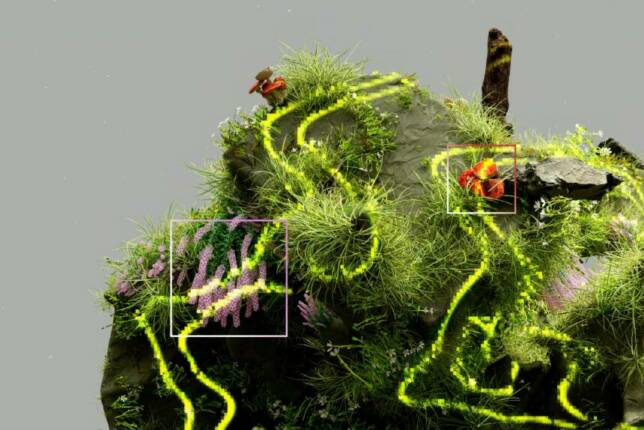
AI optimizes yields with drones, sensors, and data analytics. Precision agriculture allows farmers to adjust irrigation, fertilization and phytosanitary treatments in a targeted manner, reducing costs and increasing yields.
In France, cooperatives such as InVivo are deploying AI platforms to support farmers in optimising their crops, by cross-referencing weather data, soil analyses and satellite images.
Generative AI accelerates this dynamic: LLMs are now able to analyze complex agronomic reports and make personalized recommendations per field. However, adoption remains costly for smallholders, and the France 2030 programme – with €90 million dedicated to the PRAAM call for projects – aims to democratise access to these technologies.
2. Improved product traceability
AI, combined with blockchain, makes it possible to track every step of the product’s journey from farm to distribution. This ensures authenticity, quality, and provides increased transparency for consumers.
Danone uses AI to trace the origin of its raw materials and ensure compliance in its global supply chains. The company cross-references its suppliers’ data with anomaly detection algorithms to identify health risks upstream.
Integration into existing systems requires investment in infrastructure, training, and data security protocols. But the return on investment is significant in terms of consumer confidence and CSR compliance.
3. Reducing food waste
AI systems analyze consumption trends to adjust production in real-time. Machine learning algorithms optimize supply chains —a strategic lever in an industry where about 30% of global production is wasted.
Lactalis, the world’s leading dairy group and French company, uses AI to optimize its logistics flows and reduce losses across its entire chain, from milk collected on farms to finished products on the shelf. The accuracy of these systems depends on the quality of the data collected, which remains a challenge to become a data-centric company.
4. New Product Development
AI analyzes consumer trends to create products that are tailored to the needs of the market. It optimizes ingredients and production processes for consistent quality.
Generative AI opens up new possibilities in food R&D: simulation of ingredient combinations, prediction of consumer preferences, generation of optimized recipes according to nutritional or cost constraints. Interim R&D teams are increasingly called upon to manage these innovation projects.
Development requires investment in R&D and compliance with strict food safety regulations.
5. Improved environmental sustainability
Precision agriculture reduces environmental impact in a measurable way. Using AI to manage irrigation can reduce water consumption by up to 30%. These technologies must be widely accessible and accompanied by training programs.
The smart factory also applies to the agri-food industry: connected factories, predictive maintenance of production lines, real-time energy optimization. Industrial performance now requires AI.
To learn more about the impact of AI in other industries, check out our articles on AI in banking, AI in manufacturing , and our interview on the impact of AI in business.
Why call on Wayden for your agri-food AI project?
Wayden supports companies in the agri-food sector in their digital transformation thanks to specialized interim managers . Whether it’s deploying an AI solution, restructuring industrial processes or supporting teams through change, our experts identify priority use cases and manage the project from start to finish.
Do you have a digital transformation project in the agri-food industry?
Frequently asked questions
How is AI used in the food industry?
AI is involved in optimizing agricultural production (precision agriculture), product traceability (blockchain + AI), reducing food waste, developing new products (AI-assisted formulation), and improving environmental sustainability.
What investments is France making in AI in the agri-food industry?
The France 2030 plan devotes €1.8 billion to agricultural and food transitions, including €90 million for the PRAAM call for projects. More than 357 projects have already been funded. The global market for AI applied to agriculture will reach $2.6 billion in 2025.
Does generative AI have a role in the food industry?
Yes. Generative AI is used for the formulation of new products, the analysis of consumer trends, the generation of optimized recipes and the acceleration of food R&D.
Why call on an interim manager?
A specialized interim manager brings sector expertise, a proven deployment methodology and an ability to get teams on board with digital transformation.
Articles récents
 Smart Factory: the future of industry is digital and smart
 Feedback from an agile coach in the context of a digital transformation
 Artificial intelligence in industry: what are the challenges?
 The CFO: a key role in the company’s digital transformation
 What is omnichannel business transformation?
 ERP core model: how to successfully deploy it?