The health crisis has greatly accelerated the digitalisation of companies and has caused a real boom in e-commerce, up 15% in 2021 according to the Fevad (Federation of E-commerce and Distance Selling). This trend has led to the emergence of new innovative solutions to meet the new habits and requirements of consumers. More and more retail players are choosing to adopt Dark Stores, a logistics solution that is becoming part of the future of retail.
Dark store: definition and operation
Dark stores (or quick stores) are micro-logistics warehouses for distribution for local e-commerce. They aim to offer extremely short delivery times.
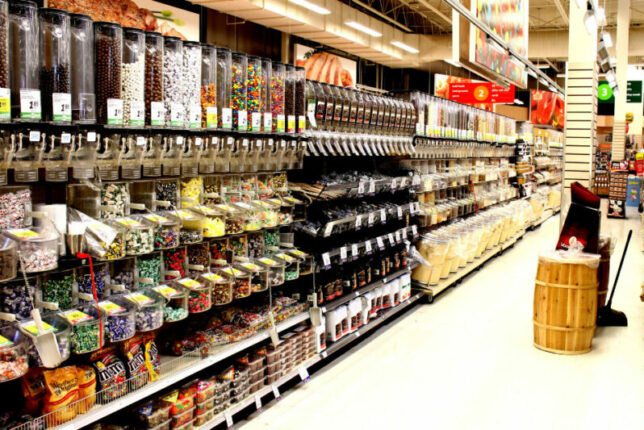
These logistics centres are in the form of a small “ghost” store, with no customers, with shelves where products are stored. Unlike a traditional store, these warehouses are not available to customers, and are reserved for order pickers. They select the items on the shelves, which delivery people then come to collect.
Dark stores are generally located at the foot of buildings or in the basement, with a surface area of 100 to 300 m2, and bring together between 1000 and 2000 product references. They most often operate on a catchment area of less than 2 kilometres. Delivery is guaranteed in 15 minutes and carried out by bike deliverers, with delivery costs of around 2 euros.
What is the purpose of a dark store?
This innovative logistics solution responds to the quick commerce trend, which emerged during the successive lockdown periods and which promises very fast delivery, in order to meet the new needs of consumers.
To meet these deadlines, dark stores are located close to the end consumer’s delivery points; They are not aimed at long-distance controls.
The primary objective of the dark store is therefore to strengthen customer satisfaction, and thus customer loyalty.
Dark stores are already present in several major cities such as Paris, Bordeaux and Lyon, and have already been adopted by some major brands such as Amazon, Monoprix or Carrefour.
Just like the digitalization of points of sale, click & collect and the omnichannel strategy, dark stores are thus establishing themselves as a solution of the future for retail players.
What are the challenges of dark stores?
Beyond the customer experience, dark stores respond to other broader challenges. They also allow you to optimize the supply chain, reduce processes and present an interesting alternative to the limitations of the traditional supply chain model. Thanks to this local warehouse, the company’s supply chain is more agile, responsive and better automated.
In addition, by reducing the travel time for delivery, dark stores offer a less polluting way than a traditional delivery system, and thus meets the CSR challenges of companies.