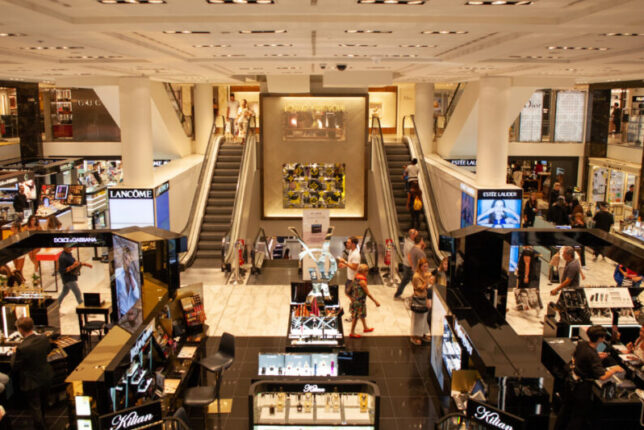
The digitalization of points of sale, also known as web-in-store, or “phygital”, has been on the rise in recent years. Faced with changing consumer expectations and habits, this digital transformation now seems to be a must for retail players. We take a look at this booming trend and its challenges.
Digitization of points of sale: what is it?
Phygital consists, as its name suggests, in reconciling the advantages of online commerce and the physical store, by integrating digital technologies and tools into the points of sale.
The objectives are numerous: to improve the customer’s purchasing journey, reduce waiting time at the checkout, boost the profitability of the business, optimize inventory management…
But this strategy aims above all, in the face of the generalization of e-commerce, to offer a complete and seamless multi-channel journey to consumers.
Here are some examples of tools to integrate into a connected store :
- The implementation of interactive terminals, allowing consumers to learn about the entire offer, but also reviews and information about the product,
- The installation of digital checkouts to reduce waiting time,
- Smart labels with QR codes to scan to find out more about the product,
- The use of connected tablets to allow salespeople to quickly access the information requested by consumers,
- The connected fitting room with interactive mirrors to see how a garment or accessory looks on you…
- Video walls and screens to broadcast information,
- Click & collect (the possibility of reserving a product online, then to be collected in store).
Phygital: a necessity to adapt to new consumption habits
In the age of digitalization and e-commerce, consumer habits and expectations are constantly evolving. Phygital is now a key step in keeping up with these new trends.
Indeed, according to the “Digitalization of stores” study carried out by the Oney group and OpinionWay in 2020, many customers naturally reconcile digital and human in their purchasing journey : 70% of in-store shoppers use their smartphones to compare prices and view product reviews. In addition, many of them go to the store to view the items but finalize their order online, especially to buy toys and childcare products (17%), high-tech equipment and household appliances (16%), and clothing (14%).
Thus, the French remain very attached to physical points of sale, even in the context of a health crisis: 91% believe that human presence is important, or even essential (54%) in their purchasing journey. However, 82% of consumers have very clear expectations in terms of the digitalisation of stores. For example, they want to:
- being able to pay anywhere in the store without going to the checkout (61%);
- Be able to locate or check the availability of products on the shelf (69%);
- Be recognized for benefiting from personalized offers (61%);
- Access customer reviews (45%)
- benefit from a pre-sales or after-sales service by video (42%);
- Benefit from more detailed product content (49%).
What are the challenges of phygital in the retail sector?
The digitalization of contact points thus responds to multiple challenges for retail and distribution players :
- Improve the customer experience
The figures cited above show that, while digital is undoubtedly central to the customer journey, the human element remains an essential element for the consumer. Thus, creating a true omnichannel customer journey, with phygital stores, is a very strategic approach for Improve customer satisfaction and retention.
- Get to know your customers better and personalise your offer
In addition, the implementation of digital tools in physical stores facilitates the collection of data. Thus, brands can offer personalized products and service, tailored to the needs of consumers. The Web-in-store is therefore very useful for getting to know your customers better and for adjusting your commercial positioning.
- Stand out from the competition
On the other hand, retail is an ultra-competitive sector that is evolving at full speed. The digitalization of physical stores is therefore an excellent way to Distinguish themselves from other market players.
- Growing your turnover
With this digital transformation, the act of purchasing is simplified, the waiting time is shorter, and customers are more numerous, loyal and more satisfied. It is therefore A powerful growth lever, which will generate more traffic in the points of sale and thus develop the company’s turnover.
You want to implement a cross-channel strategy and digitize your points of sale? The interim manager is your best ally.
At WAYDEN, we are working with an interim manager with nearly 15 to 25 years of experience and specialising in a targeted sector (ready-to-wear, local retail, mass distribution, etc.). He supports your company in the implementation of an omnichannel strategy, in the digitization of contact points, the training of teams, the use of data, etc. Thanks to his human and managerial qualities (leadership, dynamism, audacity, pragmatism, etc.), this expert steers your entire digital transformation until tangible and measurable results are obtained.