
The Darknet, the dark side of the net
The Darknet is the ideal place to exchange sensitive documents through a digital safe and which must circulate anonymously (personal files, databases, strategic files, confidential, formulas, processes, etc.). The Darknet will certainly have growing applications in the implementation and evolution of the GDPR.
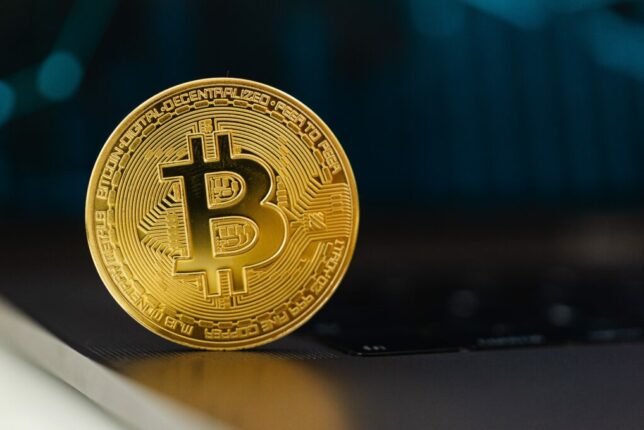
The Darknet is also the cradle of Bitcoin: it is the platform where Bitcoin comes to life, like a real currency, it is liquid, you pay for your purchases with it. Bitcoin is a currency first and foremost, and not just a speculative value.
The Deep Web
The darknet is part of a larger web: the “deep web”. The deep web is the whole part of the web (we are talking about 96% of the entire internet, in fact) that is not referenced by and therefore not accessible via the usual search engines. There are therefore classic websites that have chosen not to be indexed, for various reasons, or private servers that exchange equally private data.
In this deep web, we find the darknet: the underground internet. It would represent 80% of the deep web.
The darknet is only dark because it does not track the identity (the IP address, mainly) of those who pass through it. If we remember this, we can more easily understand the nature of the activities that are developing there. It is an overlay network that uses specific protocols integrating “anonymization” functions. To access the darknet, it is imperative to use special software or configurations, such as TOR or 2F2, for example.
The anonymity of the web
Almost total anonymity of course encourages many forms of crime. Nevertheless, we learn that the actors of certain forms of crime (arms and drug trade, terrorism, paedophilia,..) have found other meeting places and other communication channels that are even more underground, obscure and impalpable such as the deep web and other strata of the internet (see infographic below), or more ephemeral and trivialised, such as mobile phones or certain chat apps.
Other criminals or illegal merchants (false papers, hitmen, organ trafficking, prostitution rings, illegal downloads) are unfortunately still well established in this place. However, it should be remembered that criminal activities on the darknet are in the minority among all the activities that take place there.
Indeed, anonymity also encourages gatherings of oppressed ideologies or dissident political positions, giving a voice to all types of small groups, but also to oppressed populations living, for example, under dictatorship or censorship.
The darknet therefore also allows muzzled populations to exchange freely and to develop the basis for a popular uprising, for example.
There are also some NGOs that fear censorship.
Finally, many sites that are completely legal and irreproachable include some of their pages on the darknet. For example, the social network Facebook has an address on the TOR network. Unexpected.
Parallel trade
More and more, laws and police are infiltrating the darknet and starting to take control of certain abuses, especially those concerning trade. If we take a closer look at the activities that take place on the darknet and that affect the economic fabric in which we evolve as professionals or consumers:
First of all, we can mention the trade in counterfeit and stolen products, or even products that do not even exist. These parallel markets are scourges for many companies that produce consumer goods (electronics, pharmaceuticals, food, textiles,…). However, these platforms, huge illegal virtual supermarkets, are closing one after the other, infiltrated by specialized investigators.
Le Hacking
The darknet is also the cradle of many large-scale cyber attacks. Hackers find each other and exchange in complete anonymity, on the basis of “CVs” listing their hacking skills or other more or less dark activities in free consultation. Their goal is most often to penetrate companies’ networks to steal databases, to copy or sabotage industrial production, or to damage the company’s reputation by exposing its inability to prevent intrusions into their systems. Why? For the money, for ideology, for the quarter of an hour of glory or for a simple challenge.
Accessing the darknet is not just for hackers. You, your employee, your neighbor, with a simple computer and access to the (classic) web, everyone can find in two clicks the downloads and tutorials necessary to open Pandora’s box. Other levels of the web still exist, but who would be interested in them?
Let’s be clear, the darknet is not a safe place, but let’s remain vigilant at all times because the internet we know (and which would represent only 4% of the content and 0.2% of the existing sites on the internet) is sometimes not much safer.
Would you like to know more?
http://www.lepoint.fr/high-tech-internet
http://www.web-geek.fr/
https://www.chaire-cyber.fr/
http://www.funinformatique.
http://www.papergeek.fr/dark-web-and-deep-web-what-differences-and-how-to-access
Articles récents
 Smart Factory: the future of industry is digital and smart
 Feedback from an agile coach in the context of a digital transformation
 Artificial intelligence in industry: what are the challenges?
 The CFO: a key role in the company’s digital transformation
 What is omnichannel business transformation?
 ERP core model: how to successfully deploy it?