
Contents
- A sector in full consolidation, under security
- Situations that call for an interim
- What an interim QSE director does from the first months
- The case of an environmental services structure integrated into an international
- Why entrust this mission to WAYDEN
- FAQ
- Sources
pressure
QSE director
group
A sector in full consolidation, under security pressure
You may think that the collection, sorting and treatment of waste is a stable, almost routine market. The recent figures tell a different story.
Waste collection turnover increased by 5.8% in 2024, and that of treatment and disposal by 3.5% over the same period, according to a Made in FR market study updated in November 2025. This growth is accompanied by a wave of acquisitions: Séché Environnement took over the Flamme group in June 2025, Remondis acquired Schroll a month earlier.
Each takeover, each delegation taken over from another operator, brings two cultures of prevention face to face. The new shareholder arrives with its standards, its procedures, its tolerance thresholds. The teams in place, on the other hand, arrive with their habits, sometimes several years old.
Meanwhile, the national claims rate is not declining significantly. Recognized occupational diseases increased by 6.7% in 2024, driven to nearly 90% by musculoskeletal disorders, according to the annual report of the Health Insurance published in November 2025. France recorded 1,297 work-related deaths in 2024, a figure that increased for the fourth consecutive year according to a Lefebvre-Dalloz analysis of January 2026.
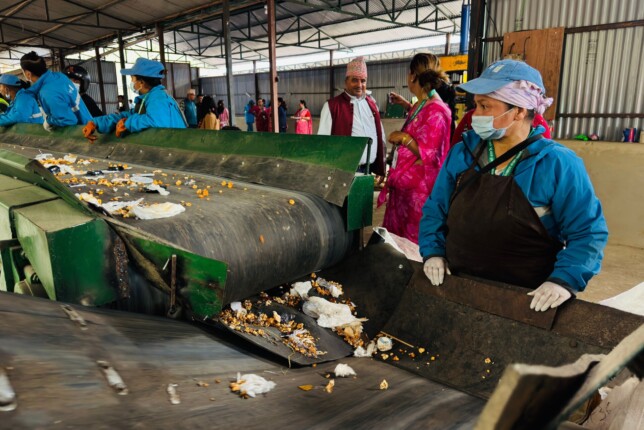
On the collection and sorting sites, accidents and occupational diseases remain, according to the Health Insurance, “still too frequent”. A site that changes hands without rethinking its prevention takes over, unintentionally, the blind spots of the former operator.
This observation weighs all the more heavily as the sector is consolidating rapidly. A group that buys several structures in a few months does not always have the time to audit each site in depth before the actual takeover of the teams. Prevention then becomes a post-acquisition project, in the same way as the harmonization of information systems or payroll, but with a more immediate human stake.
Situations that call for an interim QSE director
Three scenarios come up most often when an industrial group or an environmental services operator asks us for this type of mission.
The first is the integration of a French structure after a takeover, when the gap between the group’s standards and field practices only appears once the teams are together. The second is the prolonged absence of a QHSE director, who leaves prevention unmanned when it is most needed. The third is an internal audit that reveals a discrepancy that no one, internally, has the time or the mandate to correct alone.
In all three cases, the situation is similar. The teams continue to produce, collect and process, without anyone really having the mandate to decide on prevention priorities.
A more discreet signal deserves your attention. When a site combines several risk profiles, pedestrian and machine flows, high-speed machines, confined environments, the absence of a clear QSE manager weighs more quickly than elsewhere on the social climate. It is often at this point that an interim manager dedicated to the HSE function becomes the quickest response.
What an interim QSE director does in the first few months
As a manager, you don’t expect another audit report. You expect a single point of contact to take charge of prevention, with a clear mandate and a method.
Field diagnosis cross-referenced with data
The interim QSE director starts by going to see the workstations and listening to the operators, rather than starting from the indicators alone. He then cross-references what he observes with the actual accident history of the site and the discrepancies observed during previous audits.
A multi-year roadmap
He then builds a roadmap over several years, prioritized according to the severity of the risks rather than the ease of action. This roadmap serves as a guideline for the group and the local teams, well after the end of his mission.
Direct portage with local teams
The interim QSE director does not delegate change management to an external firm. He makes the first difficult decisions himself, which establishes his legitimacy more quickly than a plan written from headquarters.
Reporting to the Executive Committee
He reports regularly to the general management and, when the context requires it, to the executive committee of the shareholder group. This regular reporting prevents a safety issue from coming up only when an incident has already occurred, and reassures the local teams about the consistency of the support provided from the head office.
The case of an environmental services structure integrated into an international group
An international group has joined a French environmental services structure, active in waste collection, urban cleaning and industrial cleaning. Once the teams were brought together, the gap between the group’s safety standards and the practices actually observed in the field became clear.
The QHSE-CSR department of the integrated entity was then without an incumbent. An interim manager took over this perimeter to make an honest diagnosis, define priorities with the local teams and build a multi-year roadmap internally called “Safety first”.
The method chosen favoured the field rather than just dashboards. The operations managers were involved from the first weeks, which avoided the classic pitfall of a security plan perceived as imposed from the headquarters of the new shareholder.
This early involvement also made it possible to bring up daily irritants that the indicators alone would not have revealed: equipment that was not well suited to a position, ambiguous instructions on a site, or even a duplicate procedure between two entities that are now united. Correcting these concrete points has strengthened the credibility of the approach with operators, much more than a charter posted in the changing rooms.
Why entrust this mission to WAYDEN
WAYDEN mobilizes a pool of 8,000 qualified managers and deploys an interim manager in less than a week, with candidates presented within 48 to 72 hours. Our QSE profiles generally have 15 to 25 years of experience in an industrial environment or in services with a strong field component.
Each mission is personally monitored by an associate director, who is responsible for the method and the correct calibration of the profile in your context. WAYDEN conducts more than 100 interim management missions per year, including an increasing proportion of QSE and quality functions, particularly in industry and environmental activities.
FAQ
What is the difference between an interim QSE director and an HSE consultant?
The interim QSE director takes operational responsibility for the function, with a decision-making mandate, while a consultant remains in an advisory position without direct authority over the teams or arbitrations.
How long does an interim QSE director mission last?
The duration varies depending on the context, most often between six months and a year, the time to make a diagnosis, build a roadmap and support its start-up before a permanent holder takes up his position.
Can an interim QSE director work on a multi-activity site?
Yes. This is even a frequent situation on collection, sorting and processing sites, where several risk profiles coexist and require a cross-functional vision rather than a compartmentalised expertise.
How does WAYDEN select a transitional QSE profile?
WAYDEN relies on its pool of qualified managers and presents candidates within 48 to 72 hours, with an associate director who validates the match between the profile, the sector of activity and the nature of the mandate.
Sources
- Made in FR, “The waste management market in France”, updated in November 2025: growth in collection (+5.8%) and treatment (+3.5%) turnover in 2024, consolidation movements in the sector.
- L’Assurance Maladie, “2024 Annual Report of the Health Insurance – Occupational Risks”, published on 18 November 2025: 6.7% increase in recognised occupational diseases, musculoskeletal disorders representing nearly 90% of cases.
- Lefebvre-Dalloz, “4th consecutive year of increase in occupational mortality”, published on 15 January 2026: 1,297 work-related deaths recorded in 2024.
- L’Assurance Maladie, “Collection, sorting, treatment of waste“, updated on 25 November 2025: accidents and occupational diseases in the sector described as “still too frequent”.
Articles récents
 Oracle Finance: 5 missions of an operational consultant
 Interim manager in the pharmaceutical industry: 5 key missions
 The job of interim director in the medico-social sector in 5 missions
 Interim manager and safety culture: successfully taking over a site under a public service delegation
 IFRS & IAS: 10 Differences in Finance & Accounting
 What soft skills for interim management?