

As part of the release of Benoît Durand’s book Tisnès – Knowing how to bounce back after 45 years – Christophe Caupenne explains that even in the face of uncertainty, there is a solution.
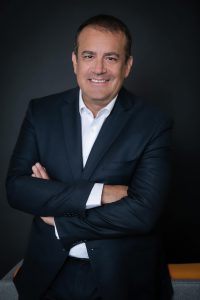
A police officer for 25 years, Christophe Caupenne was an inspector in the judicial police, in a group for the repression of banditry and then in a police force.criminal group, before joining the RAID for 12 years as commander, head of the crisis management and negotiation group. He has carried out more than 350 operations of madmen, hostage-taking, mutinies, kidnappings abroad. He is now at the head of several companies.
How did you get started in this profession?
When you join the police, the judicial police make you dream. It normally takes 10 years of policing before you get there. The good news is that I was lucky! One day a new unit specialising in banditry in the suburbs (the BREC) was created, and places were freed up in the judicial police, quite a godsend. I discovered the hunt for organized crime and therefore circumstantial fear. It is important to distinguish between fear, which is immediate, and anxiety, which is the anticipation of fear. Young people who belong to gangs are unpredictable and therefore very dangerous. On the day of the arrest, we must catch them red-handed, choosing the “ideal” moment to do so, where we can take the least risk for ourselves and for the surrounding population. This puts incredible pressure on the shoulders of the police. You only have one chance, and you can’t miss it, which puts pressure on the entire workforce.
Is that what gave you a taste for risk?
The taste for risk cannot be taught. Either you’re made to put up with it, or you’re not. It is estimated that 70% of people are flabbergasted in a situation of fear. It’s a terrible lottery, which we can’t control.
At the end of 1999, I joined the raid, in the crisis management and negotiation department. The fear of failure is not so present in this type of unit, simply because there is a plan B each time, which is the engagement of the assault group. If the negotiation fails, there is always this plan B, and that’s reassuring.
It’s the same thing in business: never stop at one option, always have a plan B, a “workaround”. The important thing is not to get stuck in what you would think is a “dead end”. In the intervention units, it is recalled that “fear does not avoid danger”. This is what partially frees us from this stupefaction.
We are always afraid, but the objective in this work is to create the conditions for courage. We were recruited for this, for our self-sacrifice. It’s like an entrepreneur: if they have the courage to make decisions or dare to take risks, they will naturally create an environment around them that is conducive to success. On the other hand, you should not underestimate the difficulties or overestimate your abilities, you must have an objective vision of yourself and the situation. I I am always wary of the magical thinking of those who are too sure of themselves. I always invite my colleagues to talk about their anxieties. Sharing them is a way of mitigating them.
How is an operation prepared?
The time of the briefing is the first part of the work: everyone pools their information, gives their opinion on a scenario, and we discuss the strategy of action. The objective is also to evoke the reluctance and doubts of everyone: will it be easy to abseile down the wall? Should you use hidden snipers? Everything should be shared with all team members.
In general, in operations, fear is taboo. When the operation is successful, no one will say that it is a matter of luck or chance. Conversely, if it is a failure, no one will denounce the design of the operation, because no one will want to question themselves. The logic is, downstream, to be able to debrief everything and learn to no longer be afraid of failure. We de-dramatize, we desacralize things. Debriefing is the best way to demystify the fear of fear. It’s a way of objectifying things and an opportunity to learn from your mistakes. With a good debriefing, we have a good reading of things. It’s the same principle for a manager: an intelligent manager knows how to motivate and want his team to give more, and he doesn’t hesitate to talk about all the parameters of a business, where the assets are, but also where the vulnerabilities are. Collective success is at the price of this honesty. Those who never question themselves will never be seen by their employees as a good manager.
How to prepare for the risk?
We must first be ready to face our chimeras, which is what we fear the most. In general, it starts in childhood. If you have been overprotected, in very good schools and if you have practiced sports such as tennis, you will certainly be combative, but less prepared than if you were in the street school and played rugby. You will not be ready, in the same way, to face the risk. This does not mean that some will not reveal themselves during formidable events, and then overcome their brakes and anxieties, but it will certainly be more difficult.
It’s like someone becoming a CEO. From one day to the next, he or she will have to take risks for which he or she will not necessarily be prepared or adapted. He will not be able to overcome his fear without paying a certain price: stomach ulcers, psoriasis, lower back pain, headaches, etc. Somatization lies in wait for all those who venture into unusual danger zones. Hence the need to increase training, crash tests, and tabletop exercises.
The most important thing is not to have regrets and to give yourself the means to succeed by having anticipated the dangers and admitted to being confronted with them. You have to be able to say to yourself: “I gave everything to make it work”, but sometimes you also have to be able to reason with yourself. Failure is part of life. In the special forces, courage is individual and collective. You have to have an appetite for risk and an ability to resist stress, but also an immense indulgence for ourselves, our potential circumstantial weaknesses, and for our teammates who can flinch, doubt, fail in their action and participate in the failure of the whole. Sometimes, one person’s fault leads to a disaster that we will have to take responsibility collectively. To be aware of this is to accept that failure is an integral part of the equation. From then on, there is no fear of failing, since there is always this element of chance.
Articles récents
 Knowing how to bounce back after 45 years, book written by Benoît Durand-Tisnès
 WAYDEN confirms its approach to excellence and continuous improvement
 WAYDEN in the New Factory
 Interview with Benoît Durand-Tisnès and Stéphanie Guernalec – BSmart TV
 Eric Spielmann Customer Story – BSmart TV
 WAYDEN participates in Talents!, an event for HR Decision-Makers