
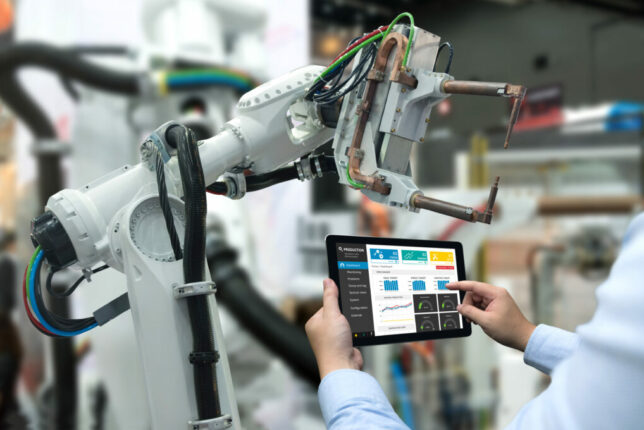
In recent years, the supply chain has undergone many upheavals (health crisis, routing problems, supply difficulties, requirements in terms of accelerating deadlines, etc.). To remain competitive, market players must inevitably review their traditional model and integrate technological innovations and digital tools at the heart of their transformation.
Digital in the supply chain: what are the advantages?
According to the American consulting firm Gartner, more than 50% of companies have not yet actively started to build an action plan for the digital transformation of their supply chain. However, taking the digital turn is now urgent to keep up with the frantic pace of market evolution .
Driving a digital transformation within the supply chain makes it possible to :
- Boost operational performance;
- Accelerate production and delivery times;
- Improve the profitability of the business;
- Optimize costs;
- Optimize production processes;
- Strengthen connectivity between the different players in the supply chain and decompartmentalize information;
- Maintain competitiveness in a constantly changing market;
- Improve risk management (IT, logistics, human, etc.) thanks to better visibility, in real time, of the entire supply chain;
- Increase business agility and resilience to change;
- Anticipate supply chain disruptions ;
- Reduce the environmental impact of the activity;
- …
Digital and faster supply chain deadlines
The digital transformation of the supply chain thus responds to today’s major challenges. Integrating technological innovations into the supply chain is particularly important essential to meet the increasingly high demands of consumers in terms of quality, production volume and deadlines.
In this, the digital transformation of the supply chain is indeed a powerful lever for speeding up production and delivery times. This will allow, ultimately, to significantly improve the customer experience and strengthen the company’s competitive advantage.
How to activate the digital transformation of the supply chain?
The digital transformation of the supply chain involves driving real change management large-scale. To be effective and sustainable, it must be organized around several key steps.
First of all, it is necessary to carry out an analysis of the existing situation : What are the obsolete processes, tools and methods? What are the time-consuming and repetitive tasks, with low added value, that can be automated? What are the obstacles to this transformation? What resources and means are available?
It will then be necessary to define the objectives and strategic challenges related to this digital transformation (ensuring the sustainability of the company, improving operational efficiency, reducing costs, improving profitability, strengthening its CSR approach, etc.), and then involve all employees in this meaningful vision.
Then will come the development of a relevant action plan , with SMART objectives (specific, measurable, achievable, realistic and defined over time) and the implementation of appropriate digital tools (ERP, WMS, AI, big data, production management software, etc.).
To implement a digital transformation within the supply chain, call on an interim manager will be particularly beneficial. Thanks to our pool of 8,000 seasoned interim managers, we at WAYDEN can assign a supply chain expert to your company. This high-flying expert, specialized in your sector of activity, will help you identify dysfunctions, areas for improvement and the levers to be activated to implement an effective and sustainable digital transformation.
Articles récents
 TMS project: WAYDEN’s experts support you in its implementation
 Our 5 tips for managing a disruption in the supply chain
 How to remedy logistical constraints in companies?
 Supply chain management: the limits of the global model in the face of the health crisis
 Logistics 4.0: what does the future of the industrial sector look like?
 How to reduce the silo effect in Supply Chain Management to improve your performance?