
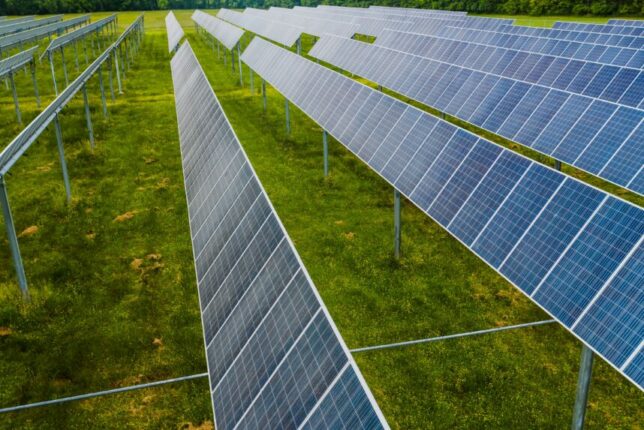
In the face of the climate emergency, CSR is now at the top of the commitments of companies and players in the industrial sector. So what are the levers to be activated to reduce the environmental impact of one’s industrial activity and pave the way for sustainable industry?
What is sustainable industry?
Sustainable industry (also known as eco-responsible or sustainable industry) is defined by the U.S. Environmental Protection Agency as ” the creation of manufactured products, through economically rational processes that minimize negative impacts on the environment while conserving energy and natural resources.”
In other words, it is a question of respecting the principles of CSR (Corporate Social Responsibility) and carrying out several actions to reduce the environmental impact at each level of industrial activity (transport, logistics, delivery, production, etc.).
As a reminder, CSR is, according to the European Commission: “a concept that refers to the voluntary integration, by companies, of social and environmental concerns into their business activities and their relations with their stakeholders”.
It aims to carry out, voluntarily, actions to contribute to meeting the challenges of sustainable development (at the social, environmental and economic levels) in order to respect several fundamental principles (human rights, environmental protection, development of the local economy, loyalty and ethics of practices, etc.).
CSR challenges for sustainable industry
Industry has a key role to play in climate issues and in reducing environmental impact. Indeed, the sector is the 4th most polluting activity in the world, after electricity production (41%) and transport (25%).
Industry (construction, agri-food, metallurgy, plastics industry, etc.) accounts for 18% of CO2 emissions, according to the Statistiques.developpement-durable.gouv.fr website.
According to the Ademe (Agency for the Environment and Energy Management), industry is therefore a “central sector to be mobilised and supported to achieve the objectives of the energy transition law”.
In addition, reducing the environmental impact in the industry is a powerful lever for competitiveness for companies. It can also make a significant contribution to reducing costs and meeting new consumer expectations for sustainable production, traceability and eco-responsibility.
What levers can be used to create a sustainable industry and reduce environmental impact?
There are many actions that can be taken to reduce the carbon footprint in the industry and develop a sustainable industry, such as:
- Choosing responsible and local suppliers;
- Favor short circuits;
- Reduce waste production and management and strengthen waste recovery and the circular economy;
- Reduce carbon emissions during the transport, production or storage of goods;
- Control the energy consumption of the premises and production sites;
- Develop products that are sustainable, respectful of the planet and aligned with consumer expectations;
- Favor sustainable and recycled materials (for the construction sector);
- Carry out a carbon assessment and implement carbon offset actions;
- Favor eco-design in the production chain;
- Optimising transport, particularly the last mile, which accounts for 20% of greenhouse gas emissions;
- …
In the era of the 4th industrial revolution, the players in the sector can put new technologies at the service of a sustainable industry. Warehouse management software (WMS, EPR, etc.) Artificial intelligence, big data, the Internet of Things and robotization can, for example, make it possible to optimize production, inventory and supply management, to monitor energy consumption in real time and to develop a green supply chain and a truly sustainable industry.
It will also be necessary to set up an audit of the existing system as well as environmental performance indicators (greenhouse gas emissions at each phase of the supply chain; kilometres travelled by transporters; energy consumption of each production site, etc.). These KPIs ( Key Performance Indicators) will make it possible to identify the sources of waste and loss as well as the areas for improvement to move towards a sustainable industry.
Call on an interim manager who is a specialist in CSR is also a very beneficial solution to activate this change management. This professional, with more than 20 years of experience in high-ranking positions, will be able to manage the entire ecological transition of your industrial activity.
At WAYDEN, we have a pool of 8,000 interim managers highly qualified, including industry and CSR experts. In particular, we have set up a CSR approach and obtained the LUCIE label, making our company one of the first EMTs (interim management companies) to adopt a CSR policy.
Articles récents
 Is CSR a performance lever for companies?
 The ISO 26000 audit: 5 steps to assess your CSR strategy
 CSR diagnosis: why be accompanied by an experienced interim manager?
 5 missions of an ESG consultant for your financial transition
ESG compliance: why use an outsourced consultant?
5 missions of an ESG consultant for your financial transition
ESG compliance: why use an outsourced consultant?
 Ecological and energy transition: 5 missions of an interim manager