

Decreased motivation, loss of commitment, unhappiness at work, ineffective management, ill-defined objectives… Many factors can impact the productivity and efficiency of employees and jeopardize the sustainability of the company. So what are the levers to activate to improve the performance of your teams? Here are our tips.
Measuring the performance of your teams
First and foremost, it is necessary to evaluate the level of performance of its teams. This first diagnosis is indeed essential to detect possible flaws and their causes. To do this, Precise KPIs (key performance indicators) must be defined: rate of achievement of objectives; respect of deadlines; absenteeism rate; level of quality of the work performed; spirit of initiative; commercial results obtained; benefits achieved; level of productivity and operational efficiency; ability to manage tasks and time; autonomy and initiative…
This detailed inventory will also make it possible to identify the strengths and weaknesses of each employee, as well as the points for improvement and the possible resources to be deployed to remedy the underperformance of the employees concerned.
Ensuring the well-being and fulfilment of its teams
It is also important to remember that a happy employee will undoubtedly be more productive. Quality of life at work, individual fulfilment and a sense of belonging are powerful motivational levers that have a direct impact on operational performance.
To improve the well-being of its employees at work , it is possible to implement, in collaboration with the company’s human resources department, a number of changes, such as:
- Create comfortable workspaces that are conducive to concentration and productivity;
- Maintain a positive and caring climate and manage conflicts;
- Strengthen team spirit;
- Organize teambuilding activities to promote team cohesion and collective intelligence;
- Organize corporate events (dinners, seminars, sports activities, creative workshops, etc.)
- Carry out regular individual exchanges with employees to keep abreast of their needs and expectations;
- Deliver benevolent feedback;
- Create a close and trusting relationship with each employee;
- Establish decent wages and hours; allocating leave and break times…
- Propose to employees the implementation of teleworking ;
- Train your employees and help them develop their skills and achieve their career goals.
Valuing, encouraging and rewarding your teams
To ensure the commitment and efficiency of its teams on a daily basis, it is also essential to value the qualities and skills of each employee, and to reward individual and collective successes.
It is therefore up to the manager to thank, encourage, show gratitude, reward the initiatives and efforts made, congratulate… To do this, it is also possible to offer performance bonuses (to reward the performance of your salespeople for example); gift vouchers; invitations to events; salary increases…
Adjust your management style
If the collective performance of the teams is too weak, it may also be caused by a flawed or inefficient management style.
There are indeed many styles of management: directive, participatory, persuasive, delegative… Thus, a manager who exercises directive leadership and who shows excessive authority may consider adopting a participative management style. With this management method, employees are very involved in strategic decision-making, the manager plays a real role as a coach and everyone is placed on the same footing. This horizontal management is therefore very effective for To ensure that teams are motivated in the long term and to boost performance.
In addition, the role of the manager is to demonstrate, on a daily basis, inspiring leadership and interpersonal skills based on active listening, optimism, enthusiasm, dynamism, emotional and relational intelligence, etc.
To find out more, read our article: “The 10 essential qualities of a good manager”.
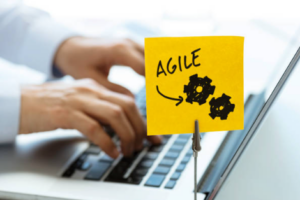
Adopt agile management
To maximize the performance of your teams of employees, it is recommended to favor an agile management mode, which aims to optimize each aspect of project management in order to maximize operational performance.
The agile management method emphasizes transversal and transparent communication, rapid decision-making, and encourages creativity, innovation, collective intelligence, adaptability, interaction, initiative and collaborative work.
To set up an agile organization, the manager will have to train his teams in agile methods and tools (Scrum; Kanban; Lean method…) and integrate them into a continuous improvement process. It will also be important to use the SMART method (simple, measurable, achievable, realistic, time-bound), to achieve the objectives set.
Creating a strong and engaging shared vision
Create and convey a clear and inspiring vision is another essential criterion for boosting performance at work. The local manager must therefore ensure that strategic orientations are communicated with conviction and enthusiasm, and that the teams are on board.
In addition, the company culture must be clearly defined and shared with employees. Indeed, Strong values that convey meaning (ethics, integrity, sustainable development, know-how, etc.) will generate a sense of pride, belonging and commitment to work that will help to strengthen motivation and productivity.
In addition, if the underperformance of the teams persists for a long time and threatens the profitability of the company, it will then be necessary to call on an interim manager. This high-flying leader, with solid sector expertise, has all the human qualities and managerial skills essential to successfully manage, motivate and unite teams. At WAYDEN, our interim managers, true leaders of men, will know how to activate the performance levers necessary to preserve the organization’s competitiveness.
Articles récents
 AI in Business: 10 Examples of Strategic Use
 Oracle Finance: 5 missions of an operational consultant
 What are the different types of management?
 The 5 levels of artificial intelligence: understanding AI in 2026
 The Agile method applied for management: why use it in the company?
 How to overcome resistance to change in companies?