What the latest discoveries tell us about ourselves
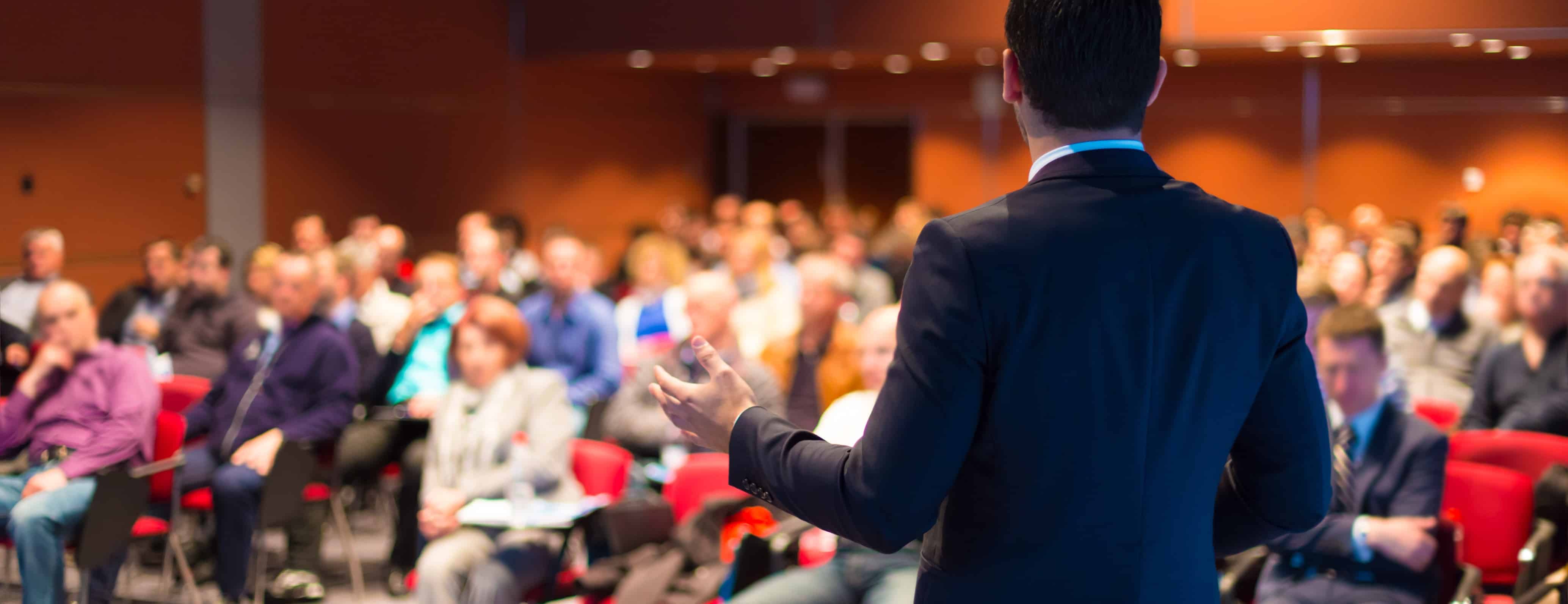
Listening to Pierre-Marie Lledo is to dive into a world of cognitive possibilities that feels good. In June 2019, WAYDEN had the honor of inviting this inspiring professor of neuroscience for a fascinating conference offered to its clients and interim managers.
We are not unaware that our brain construction is played out before the age of 3, that we use only 10% of our brain, that we are either right brain (emotion) or left brain (rational), that men are more comfortable with abstract reasoning, that women are more comfortable with language, etc. But are we really sure?
As an expert in the field, Pierre-Marie Lledo urges us, from the first minutes of his conference, to forget all these false beliefs about the brain, which he describes as “neuro-myths”. Denied loud and clear by the latest scientific research which shows just the opposite…
The neuro-revolution
Revolution 1. The brain is tailor-made
Did you know that during an autopsy, forensic doctors were not able to date a brain? Unlike teeth, bones and muscles, time does not leave its mark on the brain. Because, whatever its age, our brain is always in the making. It is an eternal construction site that can infinitely produce new neurons to manufacture new skills. It all depends, not on genetics, but on the environment in which we evolve.
Revolution 2. The brain feeds on change
Where do maladaptation disorders, known as burnout, come from? , depression and bipolarity? Often, routine. The brain destroys itself in the permanence of things. On the other hand, it thrives in change, difference, otherness and exteriority. We will come back to this.
Revolution 3. The human brain lives in three stages
Everything is (almost) said in the title. The first stage of the human brain is not the past, but the present of the past. This time that determines our present experiences in the light of our past experiences. The second time is the present of the present. The one that triggers behaviors in real time in the light of affect. The third time is the present of the future. This time allows us to travel into the future and modify our present actions according to what we have visualized.
The neuro-digital threat
But for the magic of this revolution to work, two realizations are necessary. First, to understand that the full expression of our intelligence depends on the interconnection between three poles – reason, emotion and the collective. Secondly, that fulfillment results from a clever balance between the perception of information, the time it takes to process it and the passage to action.
While these realizations seem self-evident, they are nevertheless undermined by digital time. In less than 24 hours, more than 209 billion emails circulate on the planet. In 2020, the 7.7 billion human beings that we are will be surrounded by an average of 7 connected objects. One thing is clear: we produce more information than we can process. Infobesity condemns us to know without understanding. Worse, it takes us into automatic and synchronous cognitive processes that lead to mental overload.
By merging the three dimensions of time, digital technology disrupts the transition to action. Instead of acting serenely under the effect of a healthy dose of serotonin (the chemical substance of desire), we act automatically, even compulsively, under the effect of cortisol (hormone of urgency, constraint and stress). Now, as Seneca says, “there is no favorable wind if I do not know where I am going.”
Also, to avoid joining the democracy of the gullible, we must take the (fruitful) time for reflection, and reconnect with the deep sources of our desires. These are the only ways to regain a taste for the pleasure of being, acting and living. Let’s not forget that we are all neuro-hackers, i.e. with the permanent ability to hack our brain to feed it with new things.
Regaining a neuro-friendly brain
The human brain weighs an average of 1.5 kg, which is 400 grams more than that of our ancestors. Where does this delta come from? A surplus of grey matter entirely dedicated to social bonding, to empathy. It is with this cerebral part that we understand others, their intentions, their behaviors. It is no coincidence that the social animal that we are is made up of two ears and a mouth: we are pre-destined to listen twice as much as to speak…
But interacting with the other is not enough. To this must be added a substantial dose of care. Dominant-dominated relations and coercion? Very little for the brain. Inherently, our body is passionate about fairness, inclusion and reciprocity. The more we surround ourselves with like-minded people, the more we increase the rate of behavioural resonance that allows us to create a rich and fulfilling social environment.
This is the key to what Pierre-Marie Lledo calls neuro-friendly management.