
Update in 2023 of the FRANCE TRANSITION/XERFI Study on the French Interim Management Market
The first and only benchmark study of the Interim Management market in France was conducted on 2016 data by the XERFI Institute, the French leader in sectoral economic analysis, at the request of FRANCE TRANSITION, the federation of interim management players.
A third study has been commissioned to update the sizing of the overall interim management market in France based on 2019 data.
The XERFI Institute has officially submitted the study to FRANCE TRANSITION , the main figures of which you will discover below.
A sector in sustained growth that is now worth €800 million in 2023
It appears from this study that the Interim Management market is worth around €800 million in turnover in 2023 (turnover), 70% of which is generated by Interim Management Companies (+5 points compared to 2019) and 30% of the market operated by direct Managers – the over-the-counter market.
The market having been valued by XERFI at €440M in their previous study in 2019, it emerges that the market has grown steadily over the last 4 years (+16.1% per year), with a number of intermediaries (EMTs) that has also increased from 90 to 150 players.
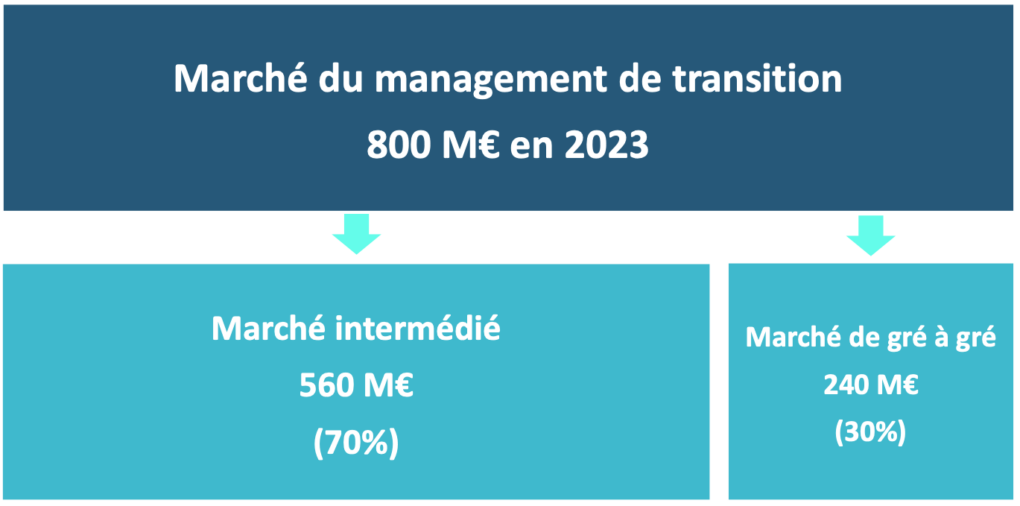
A market driven upwards by the share of the intermediated market, which is growing and strengthening (85% of the market)
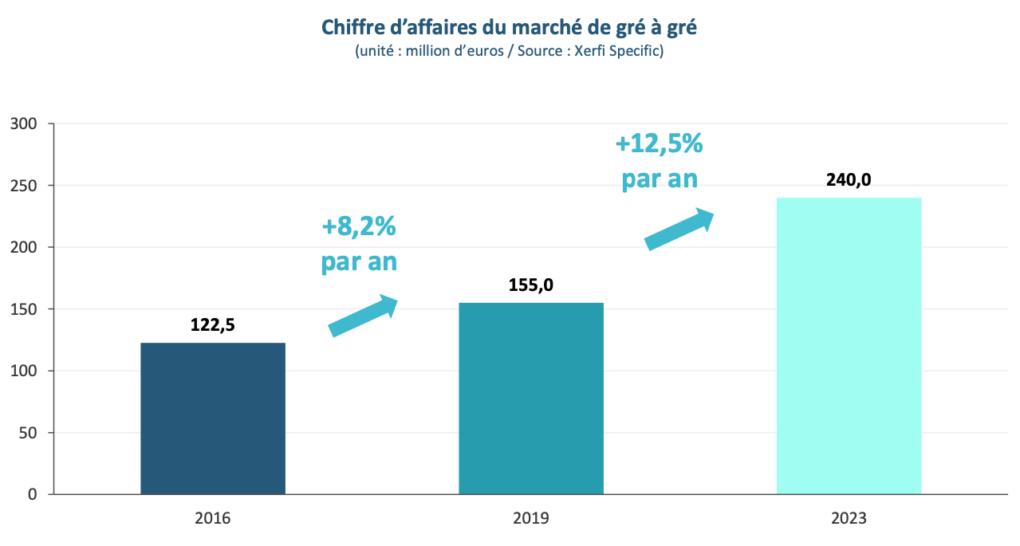
With a more precise analysis, XERFI notes that it is the intermediated share of the market (EMTs, Platforms and non-specialized players offering a specific Interim Management offer) that is driving up this growth (+19.5% per year in their category, i.e. €560 million in 2019). The part of the market operated directly by managers is growing by only 12.5% per year on average to reach €240 million in 2023.
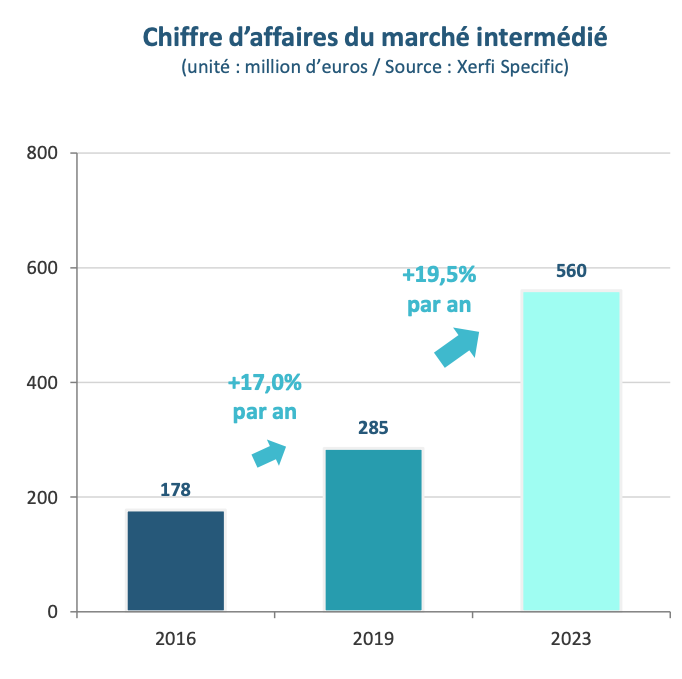
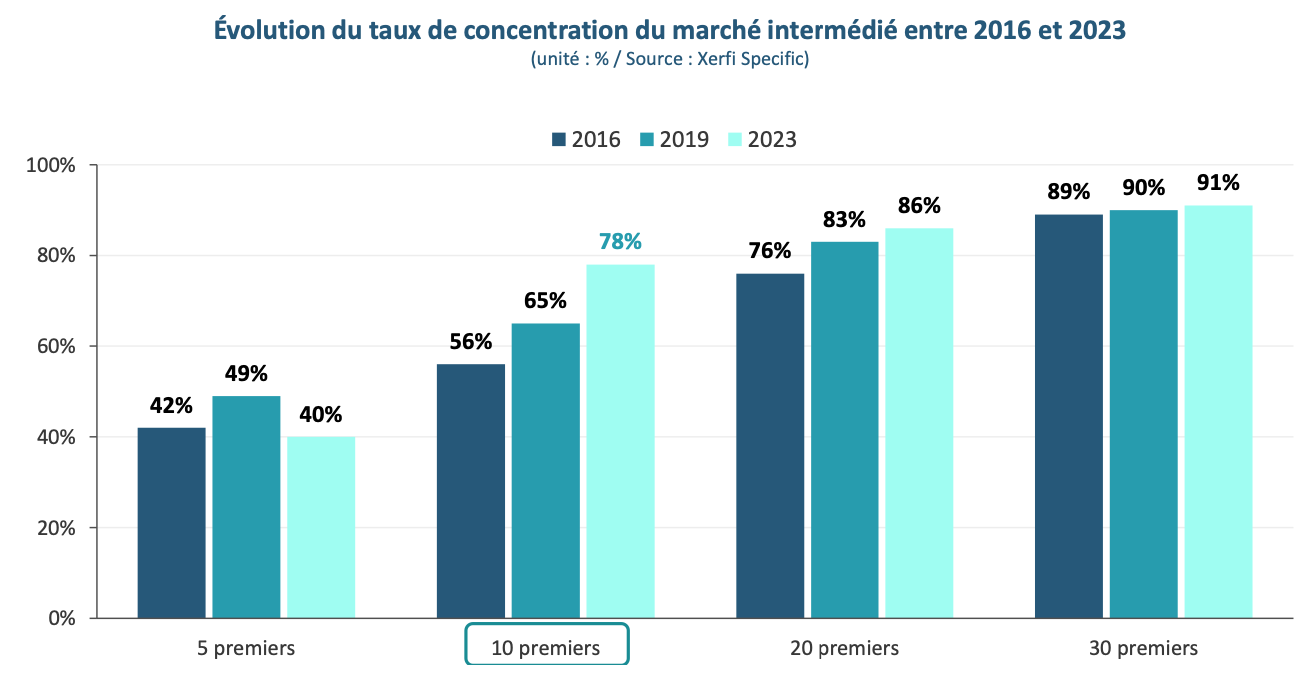
The respective sizes of the 150 Interim Management Companies (EMTs), on the other hand, still appear to be very heterogeneous in their category (€560 million in 2023): the 10 main EMTs capture nearly 78% of the market, compared to 2/3 in 2019.
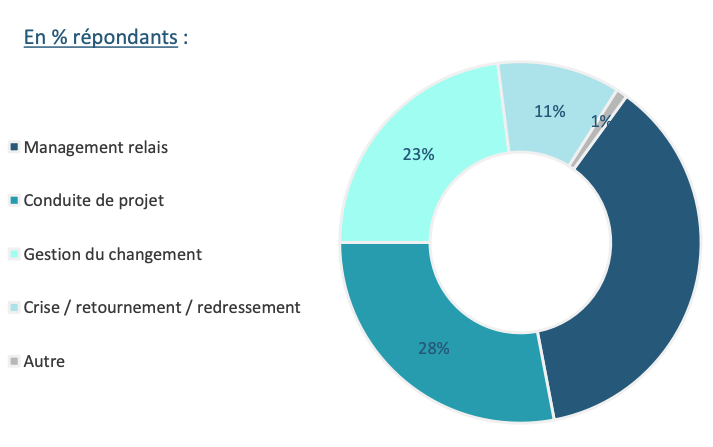
The weight of relay management missions is increasing
Relay management represents 37% of assignments, i.e. +9 points in 4 years. Closely followed by project management (28%), change management (23%) and crisis/turnaround (11%).
Impact missions still represent a limited share of the activity (between 8% and 15%) but have increased given that in 2019 this information was non-existent.
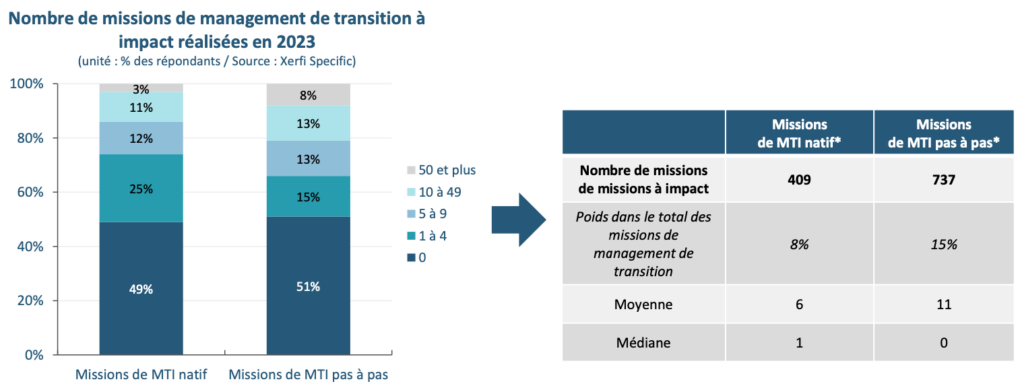
“Impact interim management consists, through missions, of measurably improving organizations on a social, societal or environmental level, while strengthening their economic performance and resilience.”
The main drivers and restraints of the market
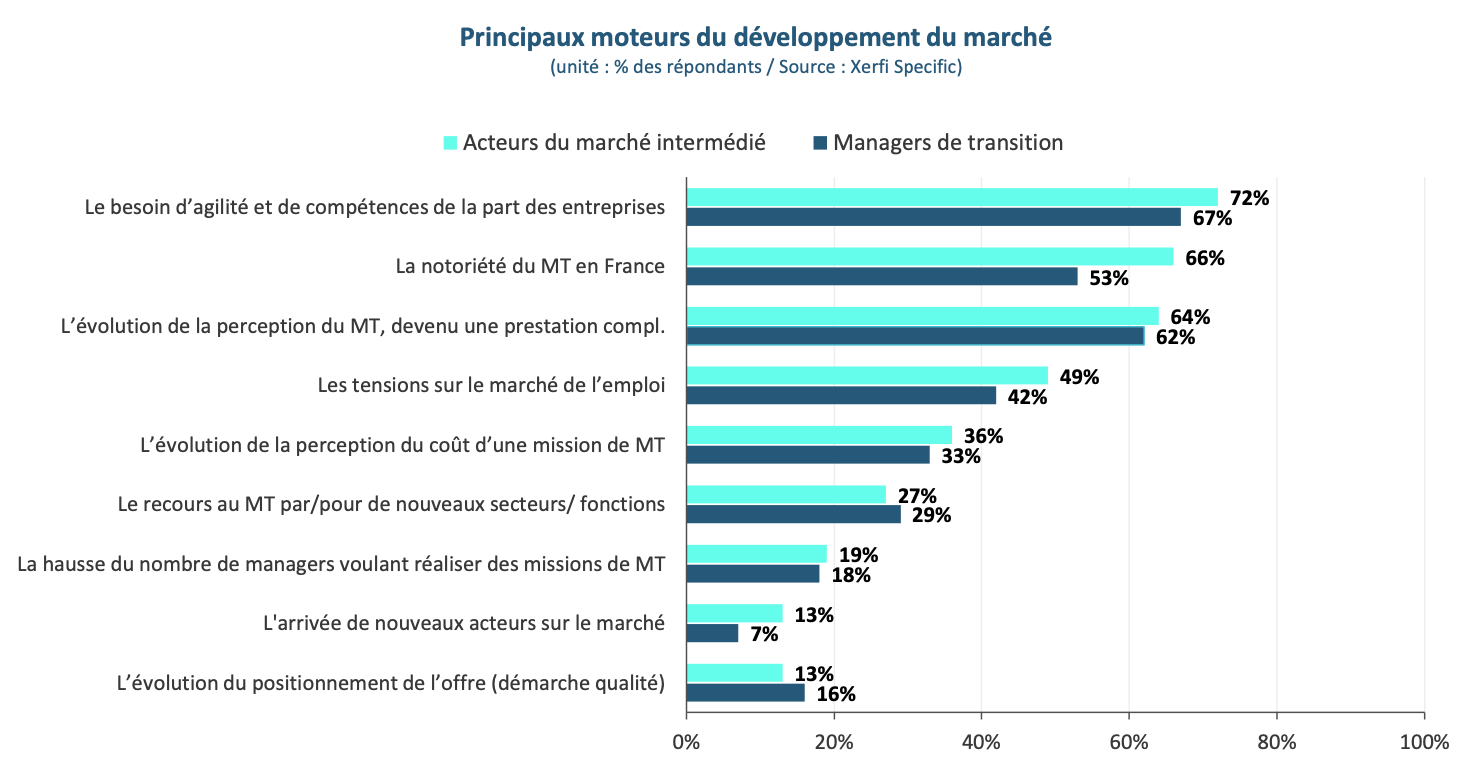
Key drivers include: the need for agility and skills (72%), with increasing demand from companies for specialized skills and greater agility; the notoriety of interim management (66%) or the evolution of perception (64%): interim management is increasingly perceived as a complete service (64%), which reinforces its legitimacy.
However, several obstacles are slowing down the development of the market: the high cost of interim management missions remains a major obstacle (78%); the lack of knowledge of interim management (75%), particularly among SMEs and start-ups , or the lack of clarity of the offer (48%): an offer that is sometimes perceived as unclear by potential customers.
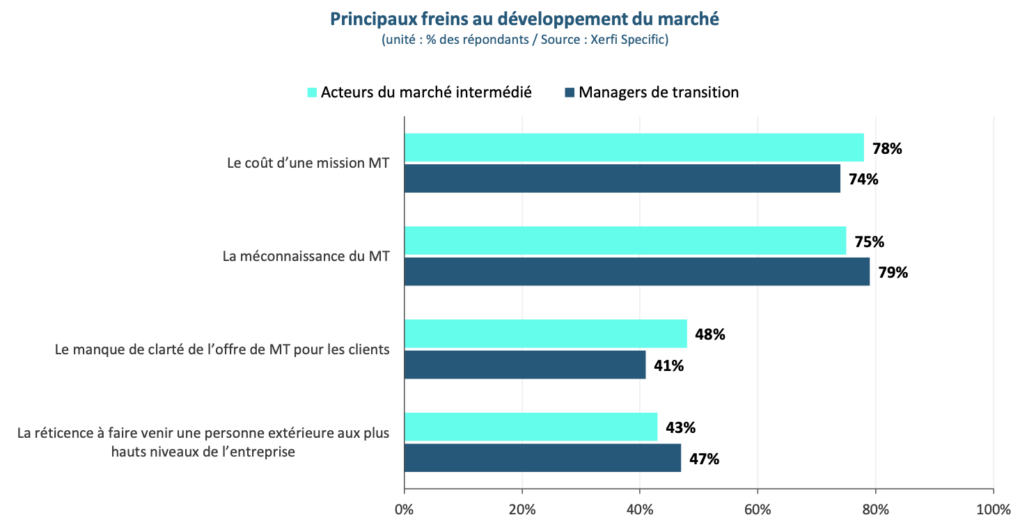
These trends show that the interim management market will continue to evolve and become more structured, offering new opportunities while posing new challenges for the players in the sector.
Expected market developments
Several major changes are expected:
- Consolidation of the sector: expected by 61% of respondents
- Intensifying competition: expected by 55% of respondents, especially with consulting and recruitment players.
- The arrival of new entrants, expected for 42% of respondents
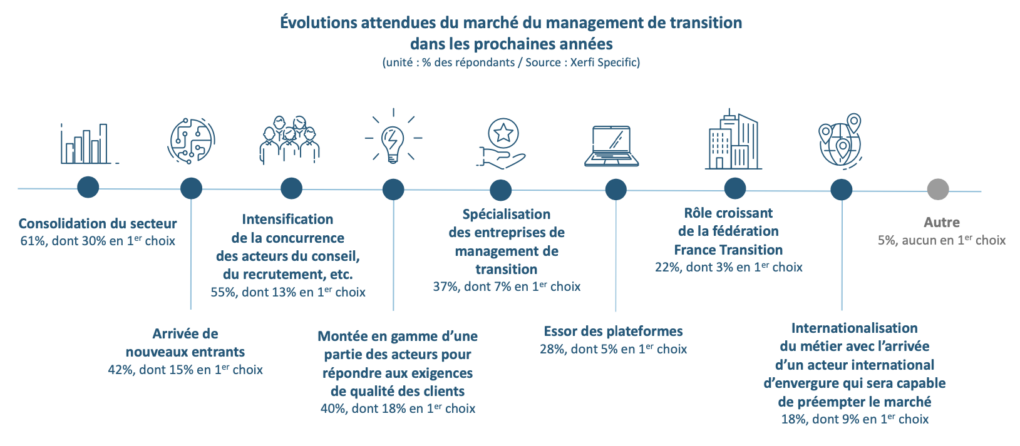
Levers of growth
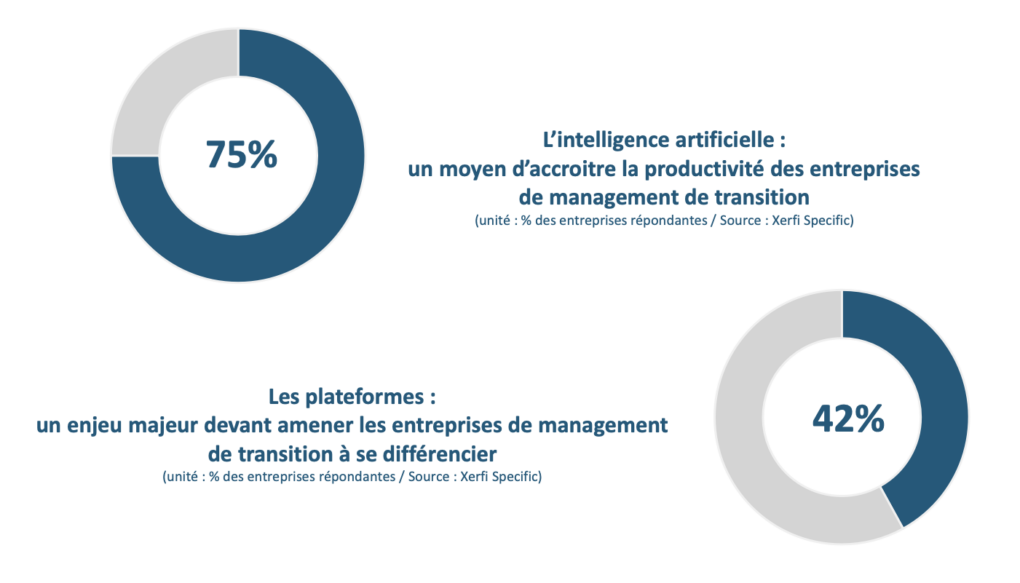
Market players have identified two main growth levers:
- Artificial intelligence (AI): 75% of respondents see AI as a way to increase the productivity of interim management companies.
- Platforms: 42% of respondents consider platforms to be a major challenge to differentiate their companies and position themselves in the market.
The Xerfi study offers several strategic recommendations for interim management companies to effectively navigate a competitive environment and capitalize on emerging opportunities.
- It is crucial to look for international growth levers to broaden horizons and diversify revenue sources.
- Seizing the opportunities offered by artificial intelligence (AI) would improve productivity and optimize processes.
- Investing in impact transition management is also becoming essential to meet social, environmental and governance challenges, while differentiating oneself in the market.
- Winning over a smaller customer base, including VSEs, SMEs and start-ups, could open up new market segments that are often overlooked.
- Finally, establishing the issue of margins as a central issue will help strengthen profitability and ensure the sustainability of companies in a context of tougher competition.
The full study: https://www.francetransition.org/donnees-du-marche/
Articles récents
 WAYDEN confirms its approach to excellence and continuous improvement
 Interview with Christophe Caupenne – “Even in the face of uncertainty, there is a solution”
 WAYDEN in the New Factory
 Interview with Benoît Durand-Tisnès and Stéphanie Guernalec – BSmart TV
 Eric Spielmann Customer Story – BSmart TV
 WAYDEN participates in Talents!, an event for HR Decision-Makers