
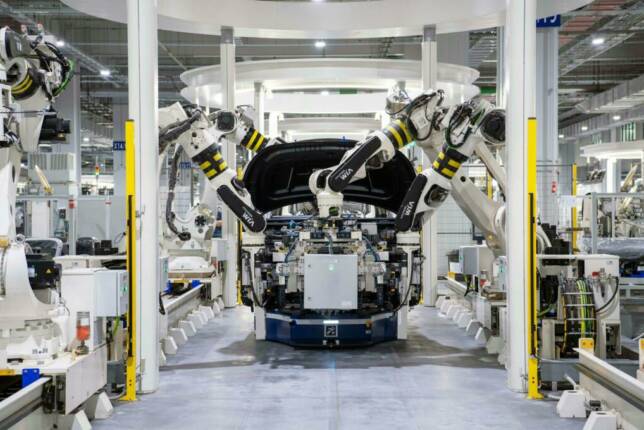
To ensure the competitiveness and sustainability of your manufacturing company, integrating industrial performance into a continuous improvement approach is fundamental. It is a prerequisite for ensuring operational excellence in a sustainable way, adapting to market changes and consumer expectations.
What is industrial performance?
Industrial performance refers to a company’s ability to optimize its processes and maximize productivity to achieve the highest level of operational excellence.
Industrial performance is reflected in particular in cost reduction, strict adherence to deadlines and improved product quality. It aims, ultimately, to ensure customer satisfaction, to preserve the company’s competitiveness and to maximize its profitability by allowing it to produce faster and at a lower cost.
What is continuous improvement?
Continuous improvement is a concept aimed at constantly perfecting and optimizing every aspect of the business through proactive and cyclical improvements. This approach involves rigorous monitoring of performance indicators defined upstream, then the implementation of appropriate corrective actions.
Why integrate industrial performance into a continuous improvement approach?
Integrating industrial performance into a continuous improvement approach is imperative to:
- Maximize operational efficiency by quickly detecting and correcting vulnerabilities, bottlenecks, sources of waste, and disruptions throughout the supply chain ;
- Improve product quality : Continuous improvement also involves continuously optimizing the level of product quality by identifying and correcting the causes of scrap, defects, and non-conformities;
- Reduce production costs : a continuous improvement approach also allows the company to reduce waste, optimize the use of its resources, maximize operational efficiency and thus reduce its production costs;
- Strengthen the company’s agility : by quickly and regularly adjusting its processes, the organization strengthens its flexibility, agility but also its resilience in the face of market changes (regulatory changes, new consumer expectations, emergence of new competitors, etc.);
- Foster innovation : continuous improvement is also central to establishing a culture of innovation and the constant search for performance through new working methods, innovative products, modern and efficient processes and tools;
- Ensure customer satisfaction : through the meticulous and continuous monitoring of customer feedback, the company can also optimize its offer and processes as close as possible to consumer expectations, in order to improve customer satisfaction and loyalty.
Adopting a continuous improvement approach is therefore imperative to guarantee the competitiveness and profitability of the company in the long term.
How can we promote the continuous improvement of industrial performance?
-
Clarifying the objectives for improving industrial performance
First of all, it is important to clarify the strategic objectives in terms of industrial performance: cost reduction, quality improvement, implementation of a CSR approach, increase in the production rate in the face of an increase in demand, etc.
Objectives must be measurable, defined over time and aligned with the company’s major strategic orientations .
-
Identify industrial performance indicators
Depending on the objectives defined upstream, the company will be able to identify the industrial performance indicators adapted to its strategic priorities, its sector of activity and its needs.
Here are some examples of KPIs (Key Performance Indicators) for monitoring industrial performance:
- Overall Equipment Effectiveness (OEE);
- Overall Equipment Effectiveness (OEE);
- The manufacturing cost per unit;
- Manufacturing times;
- Delivery times;
- The customer satisfaction index;
- The rate of customer returns;
- The scrap rate;
- The stock turnover rate;
- The number and frequency of occupational accidents;
- The number of breakdowns;
- The rate of non-compliance of products;
- …
To ensure the continuous management of industrial performance, it is crucial to closely monitor these indicators on a regular basis. Depending on the results observed, appropriate corrective actions will have to be deployed.
-
Optimizing and modernizing industrial processes
In order to continuously improve industrial performance, it is also important to regularly question one’s industrial processes and internal practices throughout the supply chain: optimization of inventory management, maintenance monitoring, quality management system, production management, etc.
To do this, many tools and methods exist, such as:
- Lean manufacturing, aimed at achieving the highest level of customer satisfaction by maximizing operational efficiency and eliminating sources of waste as much as possible;
- The implementation of new technologies : production management software (MES – Manufacturing Execution System ; WMS – Warehouse Management System ; ERP – Enterprise Resource Planning…) ; artificial intelligence tools; Internet of Things (IoT); big data; virtual reality and augmented reality equipment… These different tools are powerful levers for optimizing supply chain management, maximizing operational efficiency, modernizing processes and automating low value-added tasks;
- Agile management tools and methods : Kaizen, Six Sigma, Deming Wheel (or PDCA); 5S method…
In addition, it is essential to integrate the continuous improvement of industrial performance approach into the heart of thecompany’s culture and to ensure the permanent commitment, involvement and skills development of all employees.
Articles récents
 Operational excellence: definition, principles and tools
 How to improve a company’s sales performance?
 Operational agility: best managerial practices to implement
 What are the implications of lean management?
 ISO 9001 standard: challenges, benefits and implementation of Customer Centricity
 The project management consultant: when and why should you use his services?